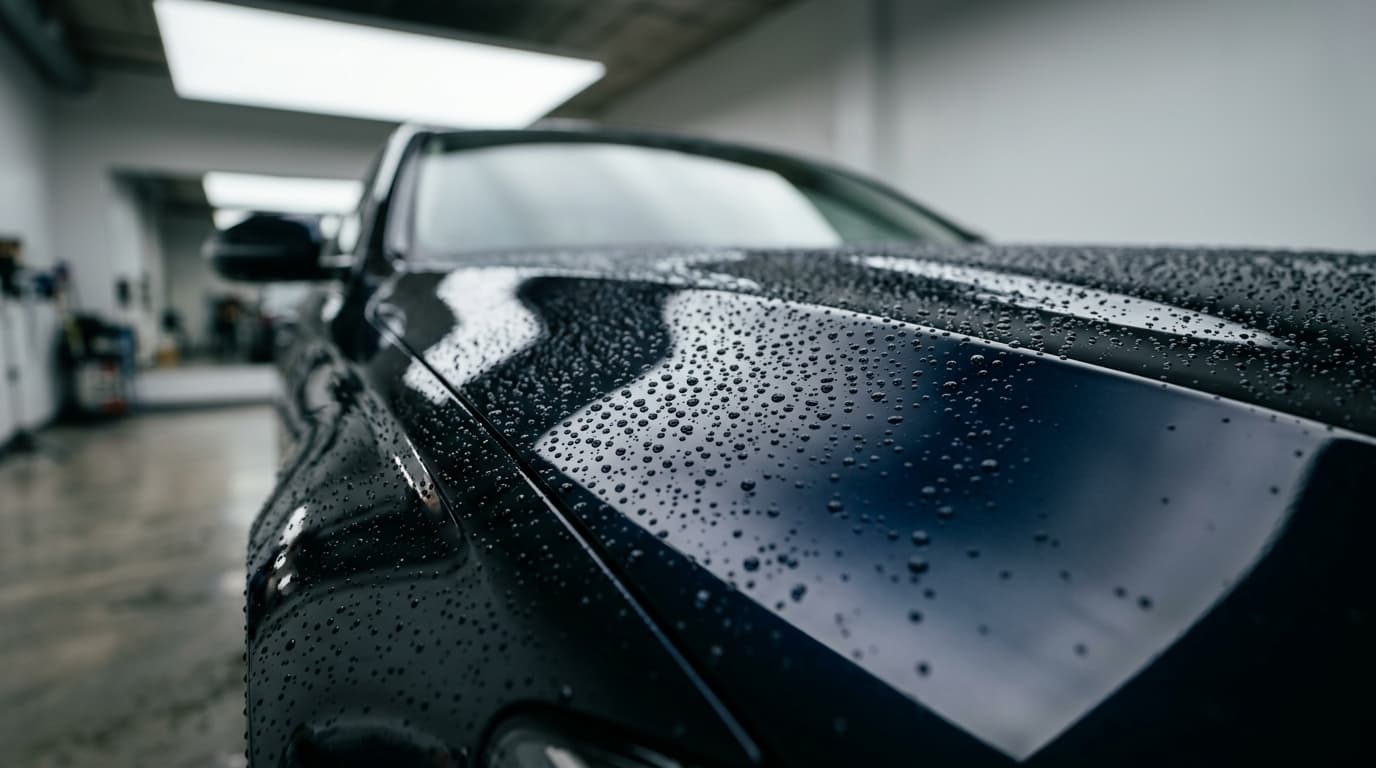
Rockford, Illinois
Ceramic Coating, Paint Correction and PPF in Rockford, IL
Updated October 17, 2026
Ceramic coating in Rockford, IL, plus paint correction and paint protection film (PPF) for cars in Rockford, Loves Park, Machesney Park, and Roscoe. Done properly, in order, with a firm price before anything starts.
Ceramic coating, correction & PPF
Ceramic Coating in Rockford, IL (2026 Prices)
Ceramic coating in Rockford starts around $1,499, paint correction starts around $299, and paint protection film runs from around $1,500 for partial-front coverage. Final price depends on vehicle size, paint condition, coating tier, or how much of the car is wrapped in film. Get a firm number before anything is scheduled.
Three real services, done in the right order: correction fixes what's already wrong with the paint, coating protects it going forward from UV, chemical staining, and road salt, and PPF physically blocks the rock chips and debris impacts that a coating isn't built to stop.
Every service, in detail
What We Actually Do
Ceramic coating
From $1,499Ceramic coating is a liquid polymer applied to a vehicle's paint that chemically bonds to the clear coat, creating a hard, hydrophobic layer. It adds gloss, resists minor scratches and chemical staining, and sheds water and road grime far more easily than bare paint or wax, typically lasting two to five years depending on the product tier and maintenance.
In a Midwest winter, that hydrophobic layer is doing real work: road salt sits on the surface instead of soaking into micro-scratches in the clear coat, which is where salt damage actually starts.
A ceramic coating is transparent and permanent-ish; it locks in whatever the paint looks like underneath it. Swirl marks, light scratches, and oxidation are still visible under a coating unless they're corrected first. Skipping correction to save money means paying to seal in flaws for the next several years.
Ceramic coating meaningfully resists UV fading, bird dropping etching, tree sap, and light chemical exposure like road salt and de-icing brine. It does not make paint immune to rock chips or deep scratches. That's a different problem (paint protection film), and a coating is not a substitute for it.
Full ceramic coating pagePaint correction
From $299Paint correction is a machine polishing process that removes swirl marks, fine scratches, and oxidation from a vehicle's clear coat, restoring gloss and clarity. It's typically done in stages, from a light one-step polish to a multi-stage correction for heavily marred paint, and is the standard prep step before applying a ceramic coating.
Most cars picked up secondhand, or ones that have been through a few years of automatic car washes, have more swirl marks in the clear coat than the owner realizes until it's corrected under direct light.
A one-step polish handles light swirling and restores gloss quickly. Multi-stage correction uses progressively finer compounds to remove deeper scratches and oxidation, taking longer but producing a more thorough result. Which one makes sense depends on the paint's actual condition, not just how the car looks from a few feet away.
Swirl marks and fine scratches are often invisible in normal daylight and only show up under direct sun or a dedicated inspection light. That's also how the result gets checked afterward: correction isn't done by feel, it's verified under the same light that reveals the problem.
Full paint correction pagePaint protection film
From $1,500Paint protection film (PPF) is a thick, clear urethane film applied directly to a vehicle's paint, most commonly the front bumper, hood, mirrors, and rocker panels, though full-vehicle coverage is available. Unlike ceramic coating, which is a thin chemical layer, PPF is a physical barrier that absorbs rock chips and road debris impacts, and most modern films are self-healing, meaning light swirls buff out with heat.
The front end of a car takes the most abuse on the highway. PPF is the product built specifically for that kind of physical damage, not the coating.
These solve different problems and are often used together. Ceramic coating is a thin, hydrophobic chemical layer that resists UV, chemical staining, and makes washing easier, but it does not stop physical impacts. PPF is a thick physical film that absorbs rock chips and road debris, but doesn't add the same gloss or hydrophobic properties on its own. A coated PPF finish gets both.
The front bumper, hood leading edge, side mirrors, and rocker panels take the most highway rock-chip damage on any car. Partial-front packages target exactly those panels rather than covering the whole vehicle, which keeps cost down while covering the areas that actually need it.
Full paint protection film pagePaint protection film
Paint Protection Film in Rockford, IL
Paint protection film (PPF) in Rockford starts around $1,500 for partial-front coverage and around $4,500 for a full vehicle. It is a clear urethane film that takes the rock chips and road debris a ceramic coating can't stop.
Highway driving out of Rockford chews up the front of a car first: the bumper, the leading edge of the hood, the mirrors, and the rocker panels. A partial-front package covers exactly those panels, which keeps the cost down compared with wrapping the whole car. Full-vehicle film is available if you want every painted panel covered. Most modern film is self-healing, so light swirls in the film itself soften out with heat. Deep cuts and chip punctures won't heal.
Film and coating are often done on the same car. The film takes the impacts, and the ceramic coating on the rest of the paint handles salt, UV, and staining. If the paint has swirl marks, correction comes first, because film locks in what is under it just like a coating does.
Full paint protection film pageSide by side
Ceramic Coating vs. Paint Correction vs. PPF
Three different jobs. This is how they line up, using the starting prices on this site.
| Ceramic coating | Paint correction | Paint protection film | |
|---|---|---|---|
| What it does | Hard hydrophobic layer on the clear coat | Machine polishing removes swirls and light scratches | Thick clear film that absorbs impacts |
| Best against | Road salt, UV, bird droppings, staining | Swirl marks, oxidation, dull paint | Rock chips and road debris |
| Durability | Typically two to five years | Removed marks stay gone until new ones are added | Self-healing for light swirls in the film |
| Starts around | $1,499 | $299 | $1,500 partial, $4,500+ full |
Read more: ceramic coating, paint correction, paint protection film.
Winter's the worst time for bare paint.
Road salt sits on the surface of coated paint instead of soaking into it. Get ahead of it before the season starts.
How it works
The Process, Step by Step
1. Inspection
The paint gets checked under direct and raking light, the same light that reveals swirl marks, light scratches, and oxidation a normal glance in a driveway misses, before anything is quoted or scheduled. This is also what sets the actual scope: a car with clean, well-kept paint needs far less correction time than one that's been through years of automatic car washes.
2. Correction, if it's needed
Swirl marks, light scratches, and oxidation get machine-polished out in stages before any coating or film goes on. A ceramic coating is close to permanent once cured, so whatever's underneath it stays there for the life of the coating; this is the step that actually determines how the paint will look years from now, not the coating itself.
3. Decontamination
A full exterior wash and chemical decontamination strips embedded brake dust, tar, and road film the paint surface is holding onto that a normal wash doesn't remove, so the coating or film bonds to clean clear coat instead of sealing grime underneath it.
4. Application and cure
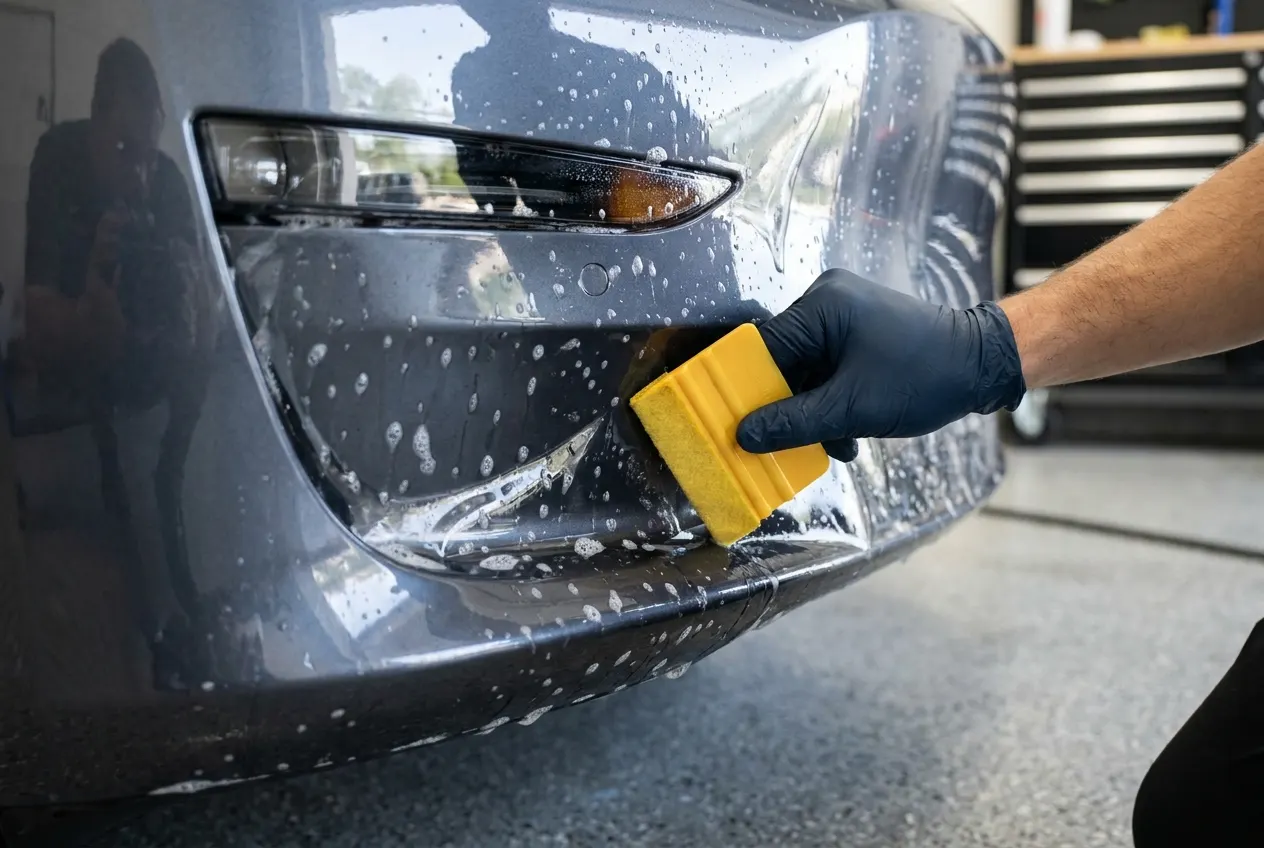
Ceramic coating cures under controlled conditions, away from dust and temperature swings that can affect how it sets. PPF is applied panel by panel and squeegeed to remove trapped air and get a clean edge. Both need real time to set up properly before the car goes back out in weather.
5. Maintenance guidance
A coated or filmed car still needs regular washing, it's just less work than bare paint. The wash cadence and technique that actually keep a coating performing, roughly every two to four weeks and more often in winter, are covered in the maintenance guide linked further down this page.
Aftercare
Keeping a Coated Car Looking Right
Wash on a schedule
Every two to four weeks most of the year, and closer to weekly while road salt is down. Use a pH-neutral soap and a separate rinse bucket for the mitt.
Skip the brush wash
A touchless wash now and then is fine. Brush-style automatic washes can put fine scratches into a coating or film, which undoes part of what you paid for.
Watch the water
Tight beads that sheet off quickly mean the coating is working. If water starts sitting flat, it is time for a deeper decontamination wash.
The work itself
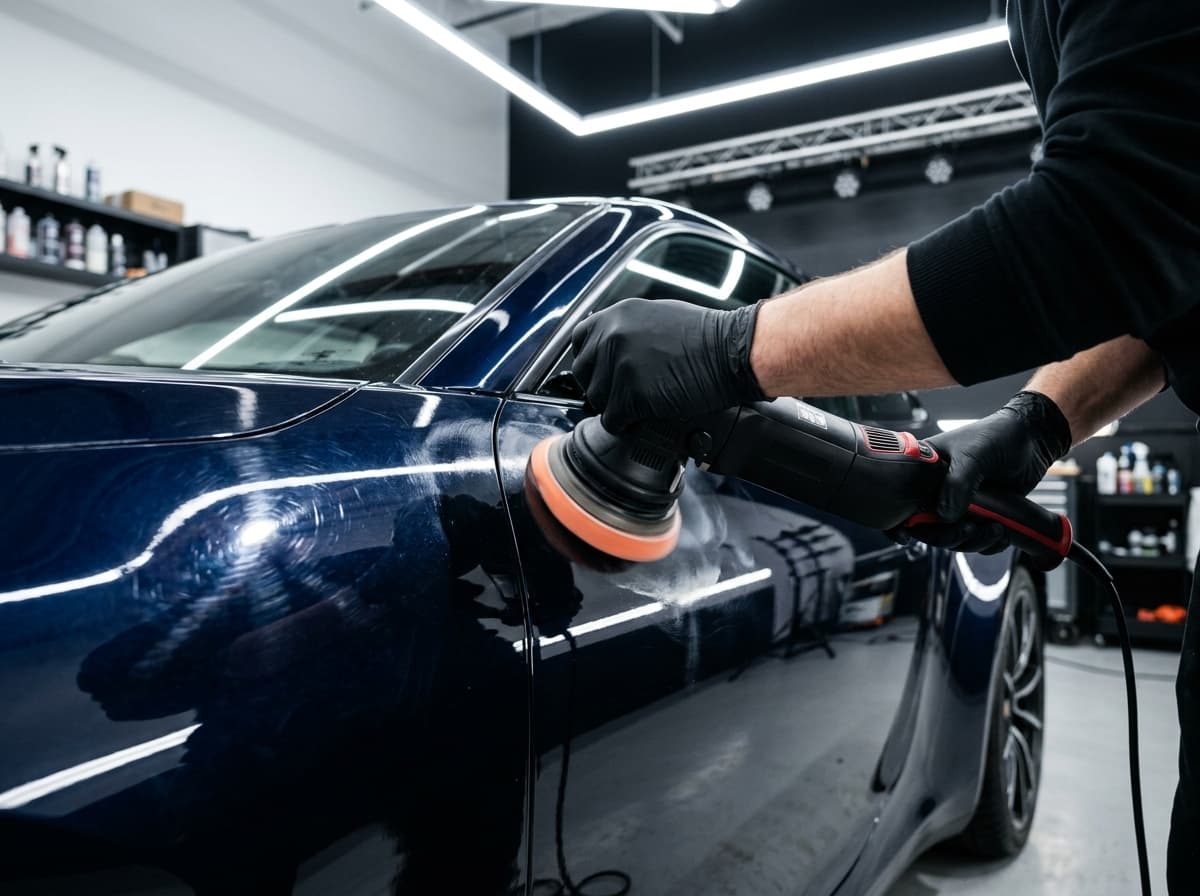
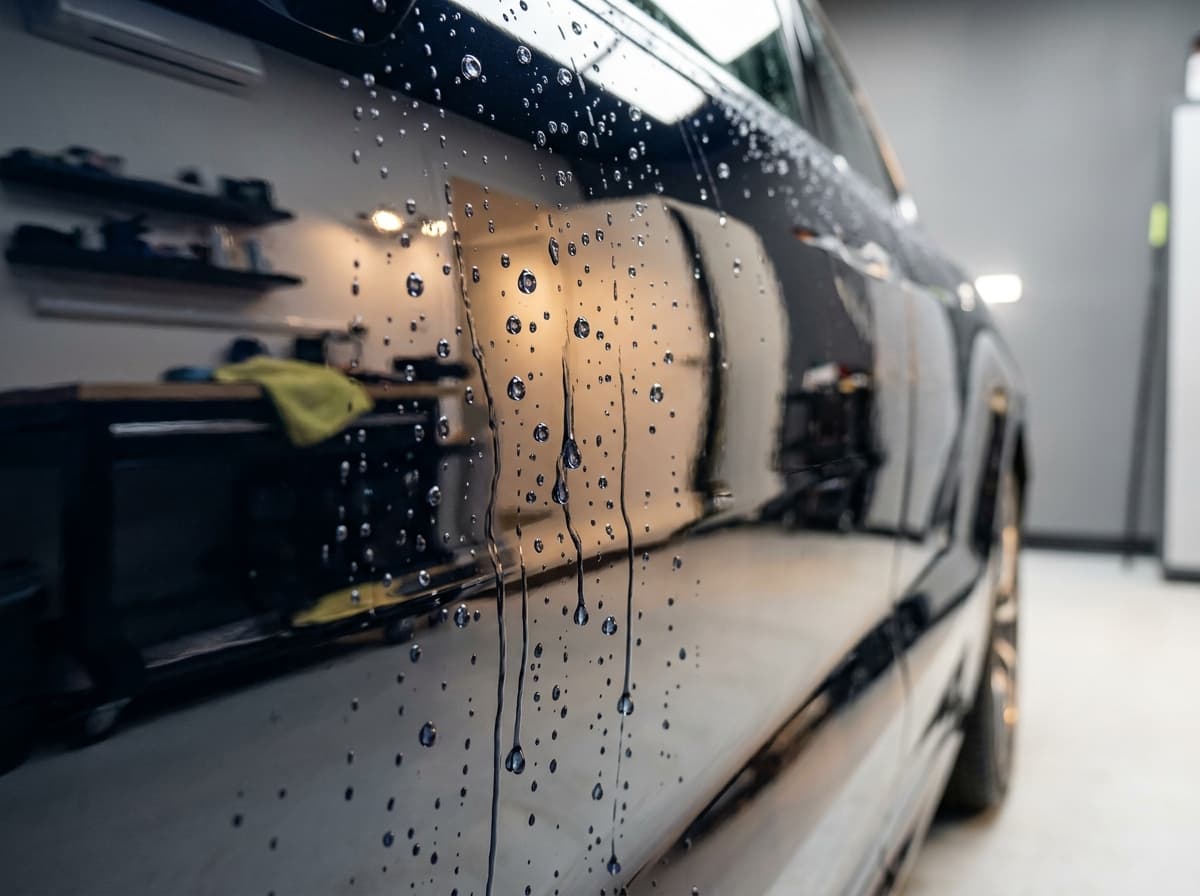
See What the Process Looks Like
What it costs
Priced by the Vehicle, Not a Guess
Starting prices below. Final price depends on vehicle size, paint condition, coating tier, or how much of the car is wrapped in film, final price depends on vehicle size, paint condition, coating tier, or how much of the car is wrapped in film. get a firm number before anything is scheduled.
| Service | Starts around |
|---|---|
| Paint correction | $299 |
| Ceramic coating | $1,499 |
| PPF, partial front | $1,500 |
| PPF, full vehicle | $4,500+ |
Why it matters here
Illinois Winters and Bare Paint
Illinois Department of Transportation reported 312,000 tons of salt spread on Illinois roads statewide in the 2023-2024 winter alone. Within Rockford, the city's own snow and ice page states the plow order plainly: “City trucks plow and salt arterial and collector roads first and salt residential streets second.” That salt doesn't distinguish a driveway from a street once it's kicked up as spray, and it sits on bare paint until it's washed off or shed by a coating built to resist it.
Source: Illinois Department of Transportation and City of Rockford, Snow & Ice.
This is also why correction has to come first in the process above. Once a coating or film goes on, whatever the paint looks like underneath it is mostly locked in for the life of the product. Skipping correction to save a step means paying to seal in the exact swirl marks and salt-era damage a coating is otherwise supposed to help prevent. Each town page in the service area below has its own specific snow-parking rule and commute numbers, since how long a car sits on a salted street varies block to block, not just town to town.
Picking the right option
Coating vs. Wax vs. Sealant
Wax lasts a few weeks to a few months and sits on top of the clear coat. A paint sealant is a synthetic polymer that bonds more durably, typically three to six months. Ceramic coating chemically bonds to the clear coat itself and typically lasts two to five years or more, with stronger resistance to UV, chemical staining, and water spotting than either one.
Read the full comparisonOne service, or more than one
Which Service Do I Actually Need?
Just correction
Right if the paint looks faded or swirled and the goal is restoring gloss, before a sale or just to fix what a few years of automatic washes did. Stands on its own, coating isn't required afterward.
Correction, then coating
The usual combination for a car being kept several years. Correction fixes what's already there; coating protects the corrected paint from UV, chemical staining, and road salt going forward.
PPF on top
Added for physical protection a coating can't provide, rock chips and road debris on the front bumper, hood, and mirrors. Often paired with coating for the rest of the vehicle.
Service area
Rockford and Winnebago County
Ceramic coating, paint correction, and PPF are available across Rockford and the surrounding Winnebago and Boone County towns below. Each town page has its own local numbers and snow-parking rule, not a copy-pasted page.
Loves Park, Machesney Park and Roscoe
Ceramic Coating Near Rockford: Loves Park, Machesney Park, Roscoe
The same ceramic coating, paint correction, and PPF at the same starting prices as Rockford. Each town has its own page with local numbers and its snow-parking rule.
Loves Park, IL
Berkshire At Inverness, Breckenridge, Keeneland Estates and more. Average one-way commute 23.0 minutes, and the local snow-parking rule kicks in at 2 inches of snow.
Machesney Park, IL
North Park, Silo Ridge, The North 2nd Street corridor and more. Average one-way commute 23.2 minutes, and the local snow-parking rule kicks in at 2 inches of snow.
Roscoe, IL
NorthPointe Terrace, Promontory Ridge, Shepard Hills and more. Average one-way commute 29.4 minutes, and the local snow-parking rule kicks in at 2 inches of snow.
Guides
More Before You Book
Ceramic Coating vs. Wax vs. Sealant: What's Actually Different
Three ways to protect a car's paint, three very different lifespans and price points. Here's what separates them.
Is Ceramic Coating Worth It?
It depends on how long you're keeping the car and what you're protecting it from. Here's the actual tradeoff.
Ceramic Coating for New Cars in Rockford, IL
A brand-new car is the best time to protect the paint, but "new" doesn't mean the factory finish is flawless, and it doesn't mean there's a waiting period either.
Ceramic Coating Maintenance Washes: How Often and Why
A ceramic coating isn't maintenance-free. It's lower maintenance than bare paint, and the maintenance it does need follows a fairly specific rhythm.
What's checked, not guessed
Correction First, Firm Price Before Work Starts
- Paint inspected under direct and raking light before anything is quoted
- Correction happens first whenever swirl marks or oxidation are present
- No price changes mid-job once the quoted work is agreed to
- No invented reviews, ratings, or years-in-business claims anywhere on this site
- No street address published; service area and towns are listed instead
Common questions
Ceramic Coating in Rockford, FAQ
What areas do you cover?
Rockford, Loves Park, Machesney Park, Roscoe, Rockton, and Belvidere in Winnebago and Boone County, Illinois. If you're just outside those, ask anyway.
How much does ceramic coating cost?
Ceramic coating starts around $1,499. Final price depends on vehicle size, paint condition, coating tier, or how much of the car is wrapped in film. Get a firm number before anything is scheduled. See the full pricing breakdown.
Do I need correction before coating?
If the paint has swirl marks, light scratches, or oxidation, yes. A coating is transparent and locks in whatever the paint looks like underneath it, so correction happens first whenever it's needed.
Do you offer paint protection film?
Yes, both partial-front coverage (bumper, hood, mirrors, rocker panels) and full-vehicle PPF.
How long does ceramic coating last?
Typically two to five years, depending on the product tier and how the vehicle is maintained afterward.
Is ceramic coating worth it?
For a car driven year-round through a Rockford winter and kept for several years, generally yes: it cuts down on salt and UV damage and makes weekly washing easier. It's a harder case for a car being sold within months. See the full breakdown in the guides below.
Can I ceramic coat my car myself?
Consumer kits exist, but they typically last one to two years versus two to five-plus for a professional application, and the result depends heavily on prep work. Correction still has to happen first either way.
Does a new car need correction before coating?
Usually a light one. Factory paint doesn't need to cure, but dealer prep and transport handling commonly leave light swirl marks even on a car with very low mileage.
Do you coat wheels or glass too?
Those are separate add-on products from paint coating, not included automatically in the starting prices above. Ask when requesting a quote if you want them added.
How often does a ceramic-coated car need washing?
Roughly every two to four weeks under normal conditions, closer to weekly during active road-salt season. See the maintenance guide below for the full wash routine.
How much does paint protection film cost in Rockford?
Partial-front PPF (bumper, hood, mirrors, rocker panels) starts around $1,500, and full-vehicle film starts around $4,500. The final number depends on the vehicle and how much of it is covered, and you get it before anything is scheduled. See the paint protection film page.
Is PPF or ceramic coating the better choice?
They do different jobs. PPF is a physical barrier that takes rock chips and road debris. Ceramic coating is a thin chemical layer that handles salt, UV, and staining and makes washing easier. Plenty of owners put film on the front end and coat the rest of the car.
Do you serve Loves Park, Machesney Park, and Roscoe?
Yes. All three have their own page with local details: Loves Park, Machesney Park, and Roscoe.
Do I need an appointment?
Yes. Service runs by appointment; request a quote and a time gets scheduled from there.
Ready to see your car like this?
Tell us the make, model, and what you're looking for. You get a firm price back before anything is scheduled.