Guide
Ceramic Coating vs. Wax vs. Sealant: What's Actually Different
Updated October 1, 2026
Three ways to protect a car's paint, three very different lifespans and price points. Here's what separates them.
Car wax is a soft natural or synthetic layer that lasts a few weeks to a few months and gives a warm, deep gloss. A paint sealant is a synthetic polymer that bonds more durably than wax, typically three to six months. Ceramic coating is a liquid polymer that chemically bonds to the clear coat itself, typically lasting two to five years or more, with stronger resistance to UV fading, chemical staining, and water spotting than either wax or sealant provide.
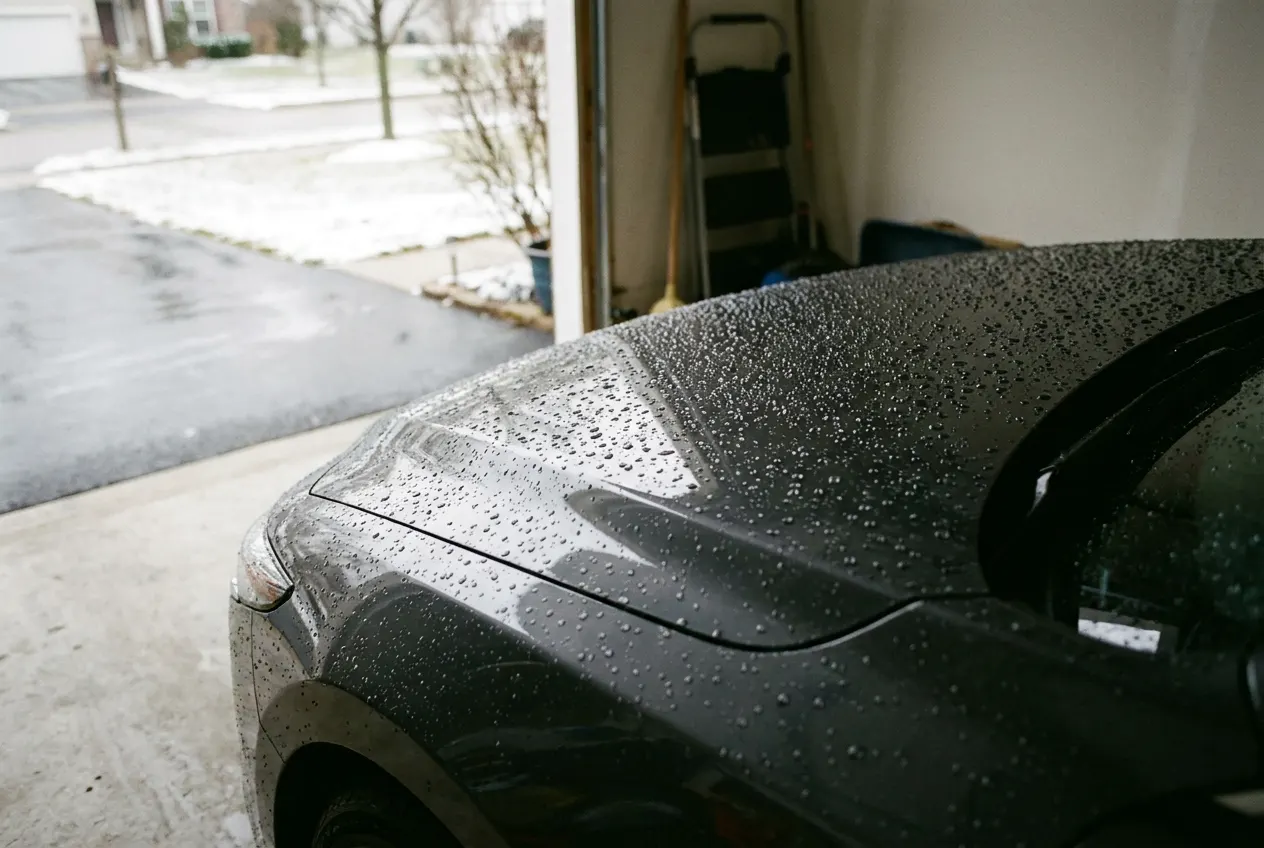
Wax: the shortest-lived option
Traditional car wax, whether carnauba-based or a synthetic blend, sits on top of the clear coat rather than bonding to it. It fills in microscopic imperfections and gives a warm, glossy look, but it breaks down quickly under sun, rain, and washing, usually needing reapplication every four to eight weeks. It's the cheapest option up front and the most maintenance over a year.
Sealant: a step up in durability
Paint sealants are synthetic polymers engineered to bond more securely to the clear coat than wax does, producing a harder, more water-resistant layer with a colder, glassier shine. Sealants typically last three to six months, roughly double to triple a wax application, which makes them a common middle option for owners who want more than wax but aren't ready for the cost of a professional coating.
Ceramic coating: the only one that chemically bonds
Ceramic coating is a liquid polymer, usually silicon dioxide based, that cures into a hard, glass-like layer chemically bonded to the clear coat rather than sitting on top of it. That bond is why it holds up for years instead of weeks, and why it resists chemical staining, UV fading, and bird dropping etching far better than wax or sealant. It's also why correction has to happen first: the bond is close to permanent for the life of the coating, so whatever the paint looks like underneath gets locked in.
Which one makes sense for a Rockford winter
Road salt and de-icing brine sit on painted surfaces for months at a time here. Wax and sealant both need reapplication multiple times across a single winter just to keep up, and neither resists chemical staining as well as a cured ceramic coating does. For a car that's driven through an Illinois winter rather than garaged for it, coating is the option built to actually hold up for the whole season without a reapplication midway through.
Common questions
Before you book
Can I put wax on top of a ceramic coating?
Yes, a layer of wax over a cured ceramic coating won't damage it, though it's mostly unnecessary since the coating is already providing the gloss and water-shedding wax is meant to add. Some owners do it anyway for a slightly different look.
Is a sealant a cheaper alternative to ceramic coating?
It's cheaper up front, but it doesn't last anywhere close to as long. Over a two-to-five-year window, the cost of reapplying sealant every few months can add up to more than a single ceramic coating application, before accounting for the extra protection the coating provides in the meantime.
Does ceramic coating mean I never have to wax again?
Correct. Once a coating is cured, waxing isn't needed and doesn't meaningfully add to what the coating already does. Regular washing is still required.
Next step
Ready to Price It Out?
Starting prices, the process, and the towns covered are on the ceramic coating in Rockford, IL home page. Or go straight to a service: ceramic coating, paint correction, paint protection film.
Source: CJ Pony Parts, "Ceramic Coatings vs. Wax vs. Sealants" (checked 2026-10-01).
Ready to see your car like this?
Tell us the make, model, and what you're looking for. You get a firm price back before anything is scheduled.